| Daniel Ng | Digital Marketing
As technology, consumer habits, and search engine algorithms evolve, digital marketing continues to evolve. By staying abreast of these trends, businesses can ensure that they are reaching their target audience, building stronger customer relationships, and staying competitive in a digital-driven market. From small business owners to ecommerce stores and big enterprises, knowing the current digital marketing trends can assist you in making smarter decisions and improving your marketing performance.
Some of the trends in digital marketing that are crucial for any business to watch are given below.
1. AI is increasingly becoming a marketing necessity
AI is revolutionizing the marketing campaign creation, management, and optimization process for businesses. AI-powered tools can analyze customer behavior, generate content ideas, automate repetitive tasks, and provide valuable insights into audience preferences.
AI is being applied in businesses for:
- Personalized email marketing
- Customer support chatbots
- Content recommendations
- Predictive analytics
- Advertising optimization
- Keyword research
While AI can streamline the process, human creativity is still vital for creating original, compelling content that resonates with customers.
2. Customer Experiences are More Personalized Than Ever Before
Brands must have a clear understanding of what consumers are interested in and provide them with relevant experiences. Customers are increasingly expecting personalized marketing messages based on their browsing habits, buying patterns and preferences, meaning generic marketing messages are less effective.
Some key ways businesses can enhance personalization are:
- Segmenting email lists
- Recommending relevant products
- Creating customized landing pages
- Using behavioral targeting
- Delivering location-specific offers
With a personalized experience, customers are more likely to be satisfied and return for more.
3.The video continues to be the king
Video continues to be one of the most engaging digital mediums. These short videos, live streams, tutorials, product demonstrations, and behind-the-scenes videos provide a more interactive approach for businesses to reach their audiences.
Some common video marketing formats are:
- Educational videos
- Product reviews
- Customer testimonials
- Live Q&A sessions
- Industry updates
- Social media reels
Great video can drive engagement, boost brand awareness and drive social sharing.
4.Voice search optimization is the rising trend
As people are becoming more reliant on voice technology, their search behavior has evolved. Voice search tends to be more conversational than the traditional text search, meaning that businesses need to optimize their content for it.
To boost visibility for voice search:
- Use natural language
- Respond to frequently asked questions
- Be sure to optimize for local searches
- Include long-tail keywords
- Optimize loading speed for websites
Adapting to voice search trends could help to target users searching via smart speakers and mobile devices.
5. First-Party Data Is Gaining Value
The privacy laws are changing and third-party cookies are now less likely to be effective, so businesses are turning towards directly collecting first-party data from their customers.
Examples include:
- Email subscriptions
- Customer surveys
- Loyalty programs
- Website registrations
- Purchase history
Responsible use of first-party data can enhance the ability of businesses to craft more targeted marketing campaigns while also safeguarding user privacy.
6. SEO Emphasizes User Experience
SEO is one of the most powerful digital marketing strategies. But today's SEO is more than just keywords and backlinks. Search engines are increasingly favoring sites that offer valuable information and have a great user experience.
Factors that play an important role in SEO are:
- Fast-loading pages
- Mobile-friendly design
- Clear site structure
- Helpful content
- Secure HTTPS connections
- Strong internal linking
It's important for businesses to invest in both technical SEO and quality content to ensure they can achieve sustainable organic growth.
7. Social commerce is on the rise
Social media is transforming into a place for customers to discover and buy products without ever leaving the app.
Social commerce is being used by businesses to:
- Showcase products
- Organize in-person stores.
- Collaborate with influencers
- Build online communities
- Increase customer engagement
Shopping on social media without any hassle is a great way to minimize the friction in the shopping process.
8. It's still possible to achieve long-term results with content marketing
There is no question about it: Good content is still one of the best investments in digital marketing. Blog posts, guides, case studies, infographics, and videos that are informative and serve as sources of help increase awareness and establish trust and credibility with the audience.
Content marketing is all about the customer and not just about the product.
Great businesses regularly post content that:
- Answers common questions
- Explains industry trends
- Provides practical solutions
- Shares expert insights
- Takes care of all the stages of the buyer's journey
Regularly, and continuously, valuable content also helps build up search engine presence with the passage of time.
9. Marketing Automation increases efficiency
Automation tools can aid businesses in improving efficiency in repetitive marketing activities and ensure continuous communication with customers.
Some typical uses of automation are:
- Email campaigns
- Lead nurturing
- Customer onboarding
- Appointment reminders
- Social media scheduling
- Customer follow-ups
Automation enables marketing departments to dedicate more time and resources to strategy and creativity and free up time for manual tasks.
10.Data Analytics leads to better decisions
Nowadays, data is a crucial element of modern digital marketing. Regularly monitoring website traffic, campaign performance, customer engagement, and conversion rates can inform businesses of decisions made that can optimize marketing effectiveness.
Useful metrics include:
- Organic traffic
- Bounce rate
- Conversion rate
- Customer acquisition cost
- Investment Return (IR)
- Average session duration
These metrics can be used to track and identify areas for improvement, and to allocate resources more effectively.
Preparing for the Future of Digital Marketing
Technology will continue to influence the way businesses communicate with customers. These new technologies like augmented reality, predictive AI, conversational marketing and advanced analytics will offer new avenues for engagement and growth.
To be flexible, businesses should:
- Rising to test innovative marketing avenues
- Investing in employee training
- Monitoring industry developments
- Conducting regular changes to SEO strategies
- Prioritizing customer experience
Businesses that are willing to step out of their comfort zone and be innovative and customer-centric will be more likely to succeed in the future.
Conclusion
As digital marketing is constantly evolving, it is important for businesses to stay up to date on the latest trends. The future of online marketing is driven by artificial intelligence, personalized experiences, video marketing, voice search, first-party data, SEO, social commerce, automation, and data analytics.
In an age of new-fangled technology and trendsetting, companies should be mindful of what technologies and strategies are right for them and their customers rather than following the latest bandwagon. Innovation, combined with content and robust customer relationships, can help organizations develop an online marketing strategy that is sustainable and empowers long-term growth and success in today's highly competitive digital landscape.
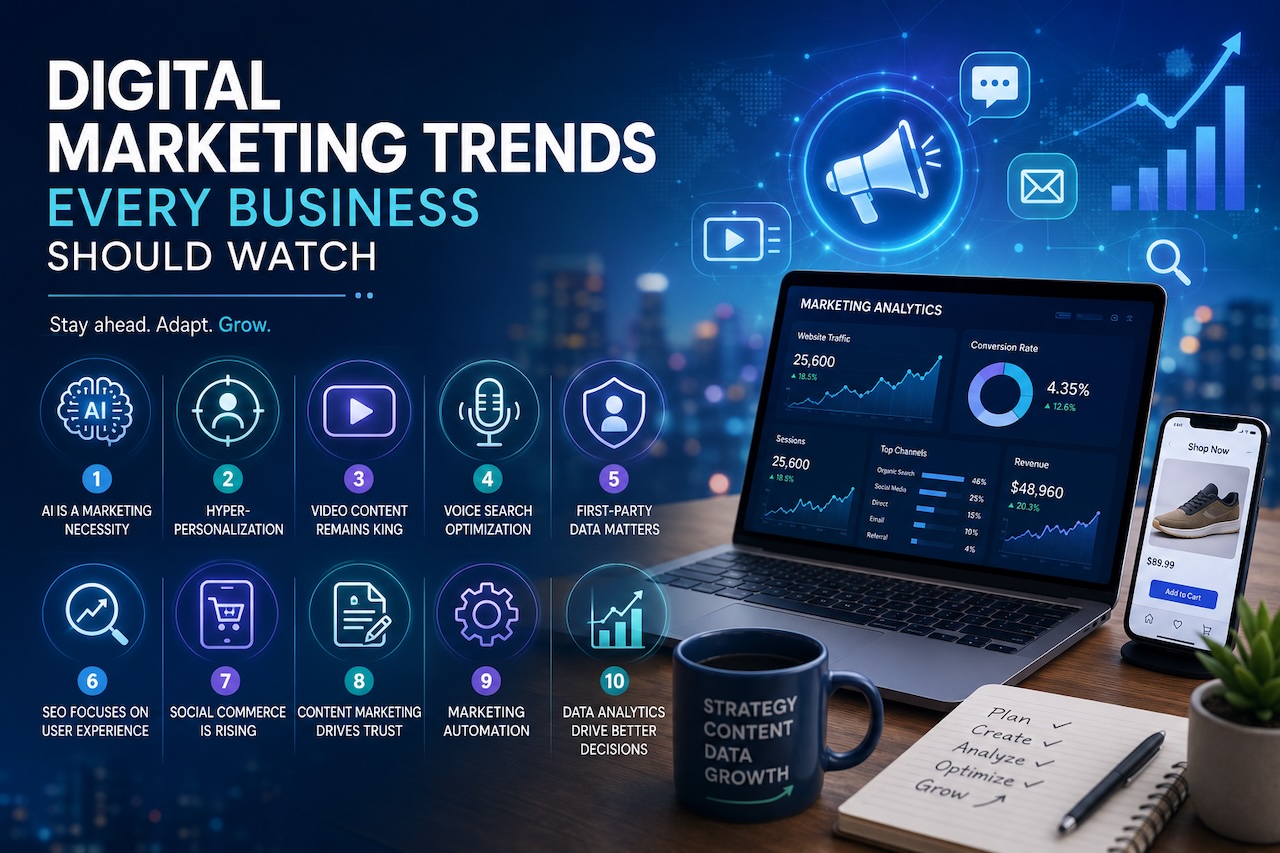
Featured Image generated by ChatGPT.
Author

Daniel Ng
0 Comments
Comments are moderated to keep the discussion useful and respectful. Spam, automated submissions, and low-value promotional comments are removed.
Leave a Comment