
| Tejasvi Sah | Web Design, Mobile App Development, Web Development
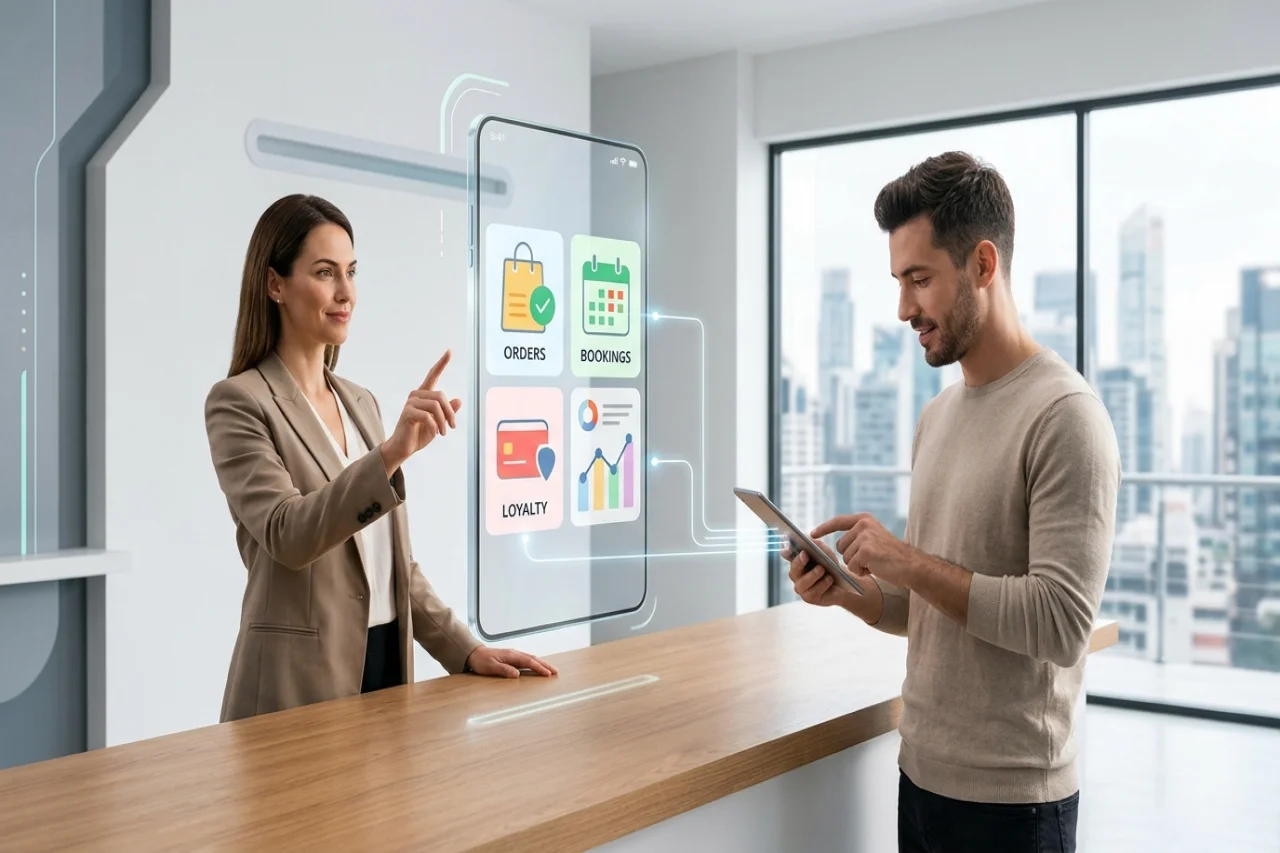
Not only can a mobile app be used as one of the digital touchpoints businesses have available, but it can also be used by clients to access goods, place orders online, schedule services, access customer service, and even reach the brands themselves.
For businesses, it improves their control over the customer journey. An app could attract many valuable customer touchpoints to a business channel rather than relying solely on marketplaces, social platforms, or third-party channels.
Whether it's ecommerce businesses, restaurants, retail stores, service providers, health care providers, or businesses with subscription-based models, mobile applications can help make repeat interactions easier for customers and allow brands to better understand their behavior.
However, the main thrust should not be to develop an application just due to the fact that the customer is using their smartphone. The app must address a customer need, and provide a quantifiable reason for a business.
Why Businesses Need a Direct Customer Channel
While third-party platforms can help businesses acquire customers, they may also control a large portion of the customer experience. Product discovery, promotion, reviews, payments, and customer data could be spread across several platforms.
Mobile apps can provide businesses with more control over these customer interactions.
Buyers can easily see product details, order goods, find service information, use their rewards, and reach out to our support without having to change platforms. Meanwhile, businesses can be informed about customer interactions via their own digital channel.
Decrease Reliance on Third-Party Platforms
While marketplaces and aggregator platforms offer reach, they also come with added expenses and restrict business-to-customer communication. In the case of a mobile application, a new sales and engagement channel is established, allowing a business to dictate the customer's path.
Develop Direct Connections with Customers
After they've made a purchase, an app can reach out to the customer again to keep the brand's experience alive. History of orders, saved preferences, loyalty programs, notifications, support, and more can all be integrated into a single customer account.
Understand Customer Behavior
First-party app data can provide useful information about search activity, purchases, reordering, product interests, and customer engagement.
Simple Ways to Turn Any Mobile App into a Direct Customer Channel
It's easy for customers to download an app, but then what? Let's say customers do download an app; what is the next step? The bigger opportunity is to get the customers back. It should have a strong user-return incentive when a repetitive purchase or service is needed for the business.
Make Reordering Easier
Over the years, if a customer is likely to buy the same products at regular intervals, it shouldn't be a problem to put them straight onto the shelf the next time. Buying previously ordered, saved, or purchased products, as well as subscriptions, can make it easier to make a repeat purchase.
Build Loyalty into the App
Rewards loyalty can link purchases with points, rewards, memberships, referrals, etc. Loyalty doesn't need to be something different; it can be an element of the normal customer experience.
Send Useful Notifications to Customers
Push notifications can aid in both service and sales efforts. They can be used by businesses for:
- Order confirmations
- Delivery updates
- Appointment reminders
- Payment notifications
- Loyalty rewards
- Product availability
- Relevant offers
- New product announcements
The purpose should be clear for each notification. If your message frequency is too high and your messages are irrelevant, customers may turn off notifications entirely.
Integrate The Business with the App
When designing a customer-facing app, it's better to integrate it with the existing systems that run the business.
Orders placed from the app should land in the respective order management or POS. To use the right terms, it is critical to ensure that customer information is available to the appropriate teams. Where possible, information on the inventory should represent the actual supply. This ensures the app isn't a "one sales channel" to rule them all.
- CRM Integration: Integrate customer data, attributes, purchase history, support activity, and engagement with the CRM system to enable customer-facing teams to collaborate using relevant data.
- POS and Payment Integration: Integrating a restaurant or retail app with point-of-sale (POS) and payment systems can help ensure transaction and order details remain synchronized.
- Inventory Integration: Connecting product availability to inventory systems can reduce the likelihood of customers ordering products that are out of stock.
- Delivery and Logistics Integration: Delivery and logistics integrations can connect orders with dispatch, status updates, tracking, and customer notifications.
Personalize the Customer Experience
Utilize the information on customer behavior to make personalized decisions within the mobile application. Browsing behavior, favorite categories, customer interaction, and customer service usage can be helpful for this purpose. It will help customers avoid unnecessary time wasted and locate products or services based on their preferences.
Add App-Specific Value
Make it so that customers can use your app directly instead of just placing orders. You may want to offer your customers early access, app-specific products, special bundles, self-service capabilities, or any other services you could add to the app experience. The goal is to provide customers with a reason to use your app.
What Makes a Mobile App Useful for Customers?
Business apps are typically defined by what customers want to do. For an e-commerce customer, the search and purchase of a product are crucial. One restaurant customer wishes to look through the menu and order something. An appointment booking or tracking may be in the interest of a service customer.
These actions should be made easier in the app, and not an additional part of the customer funnel.
Faster Product Discovery
Search, categories, filters, customers saved items, and relevant recommendations can and do help customers find the right products without having to go through additional screens.
Search is the significantly more important aspect for businesses that have grown large catalogs. Searching should be based on the words and phrases that customers have used for reference, not on the way the catalog is organized.
Improved Ordering and Checkout Process
This is where a direct app can help store pertinent customer information, saved addresses, previous orders, and preferred payment methods. This has not only shortened checkout but also repeat purchases, with quicker return customers.
Convenient Booking and Reservations
For appointment-based enterprises like restaurants, clinics, salons, and services, mobile apps can help users determine where they are available, book an appointment, be reminded, and manage their current bookings.
Accessible Customer Support
Support does not need to be a piece-part of the shopping process. From the same application, one can consult the FAQs (frequently asked questions) and access order information, service requests, chat, tickets, and other support services.
How To Use Customer Data to Enhance Direct Mobile Experience
A direct app channel could give a better understanding of how customers are interacting with the business.
The helpful information isn't only for people who have finished the purchase. Additionally, businesses have access to product searches, page views, cart abandonment rate, repeat visits, notification responses, and support inquiries.
These interactions can be used to determine areas that customers would like to see improved.
Identify Purchase Patterns
Purchase history may indicate which products are purchased repeatedly, the frequency of repeat purchases, and that particular repeat demand may be in specific product categories.
Improve Offers
By monitoring customer activity, businesses can offer more targeted promotions to specific customers rather than promoting the same promotion to all customers.
Find Customer Drop-Offs
If there is a lot of searching and they don't progress, they don't buy and leave the product application, or keep leaving certain product applications. The data can suggest where to pay attention to the customer path.
Identify Customer Preferences
Not only can customer interactions give insights into purchase patterns, but they can also provide information about the products the customer frequently browses, the categories he or she is interested in, his or her pricing response, and interactions with certain features of the app.
Enhance Customer Retention
Customer behaviors such as visit frequency, purchasing rate, notification engagement, and customer service interaction can inform the business about the behaviors of its customers post-purchase. It will provide insights into the areas that need improvement in order to retain customers.
Build the App Around Business Goals for Better Customer Channel
The business model should come before the list of features when developing a mobile application. The app's features should reflect the customer actions and business goals it is intended to support.
Direct sales and repeat purchases might be a priority for an e-commerce company. For a restaurant, priorities may include ordering, reservations, and loyalty. Booking, payments, and support may be important priorities for a service business.
These are the priorities for a feature set.
For Ecommerce Businesses
A direct ecommerce app can bring together:
- Product discovery
- Search and recommendations
- Cart and checkout
- Payments
- Order tracking
- Reordering
- Loyalty
- Customer support
For Restaurants
A restaurant app can be used to support:
- Digital menus
- Online ordering
- Table reservations
- Delivery
- Pickup
- Loyalty rewards
- Offers
- Payments
For Service Businesses
You can utilize an app in your service-related business for the following:
- Appointment booking
- Service requests
- Payments
- Customer records
- Notifications
- Support
- Service history
This helps to make the development relevant to the customer's actions and related to business priorities.
Types of Mobile Apps That Can Support Direct Customer Engagement
The right type of mobile app depends on the actions customers need to complete and the business processes that support those interactions.
Customer Apps
Customer-facing apps can bring together activities such as shopping, ordering, booking, payments, account management, and support.
Ecommerce Apps
Ecommerce apps can combine product discovery, search, checkout, order tracking, loyalty programs, and repeat purchasing within a direct mobile channel.
Restaurant Apps
Restaurant apps can support digital menus, ordering, reservations, delivery, payments, loyalty programs, and customer communications.
On-Demand Apps
On-demand apps can support bookings, dispatch, payments, service requests, tracking, and customer updates.
Loyalty Apps
Loyalty apps can connect purchases and customer interactions with points, memberships, rewards, referrals, and repeat engagement.
Integrated Mobile Apps
Mobile apps can also connect with business systems such as CRM, ERP, POS, payment, inventory, delivery, support, and analytics platforms to keep customer-facing and operational workflows aligned.
Measure Mobile App Performance Beyond Downloads
App downloads are a prerequisite. It is also important to consider how activities run afterward. These can be helpful:
- Monthly active customers
- Repeat purchase rate
- Orders through the app
- Average order value
- Checkout completion
- Reorder frequency
- Loyalty participation
- Customer support usage
- Notification engagement
- Customer retention
These metrics give a better understanding of whether an app is a useful customer channel or not.
There is a higher absolute number of downloads, but not a large number of return visits. For instance, the high number of downloads and limited repeat usage could indicate that the app is not providing a compelling reason for customers to use it repeatedly. When a higher percentage of purchases are repeat purchases, it suggests that customers are moving to use the app for repeat purchases.
Conclusion
A mobile app is valuable to customers if it provides them with a compelling reason to use it on an ongoing basis.
The better the use case (not the number of features), the better the app will be. The most effective apps make important customer actions easier, keep relevant information in one place, and connect the customer experience to the systems that operate behind the business.
This can provide an immediate connection to sell, to serve, to be loyal, and to communicate for businesses, without relying on third parties.
It's a simple starting point: identify the customer's actions that are important, focus the app on those actions, tie up with business operations, and use what customers do to enhance the experience over time.
Your mobile app should do more than just fill out a new screen for your business. It should provide a reason for customers to visit businesses directly. It should make sense to customers to go straight to the business.
Author

Tejasvi Sah
0 Comments
Comments are moderated to keep the discussion useful and respectful. Spam, automated submissions, and low-value promotional comments are removed.
Leave a Comment