
| Rosie Anna | Cybersecurity
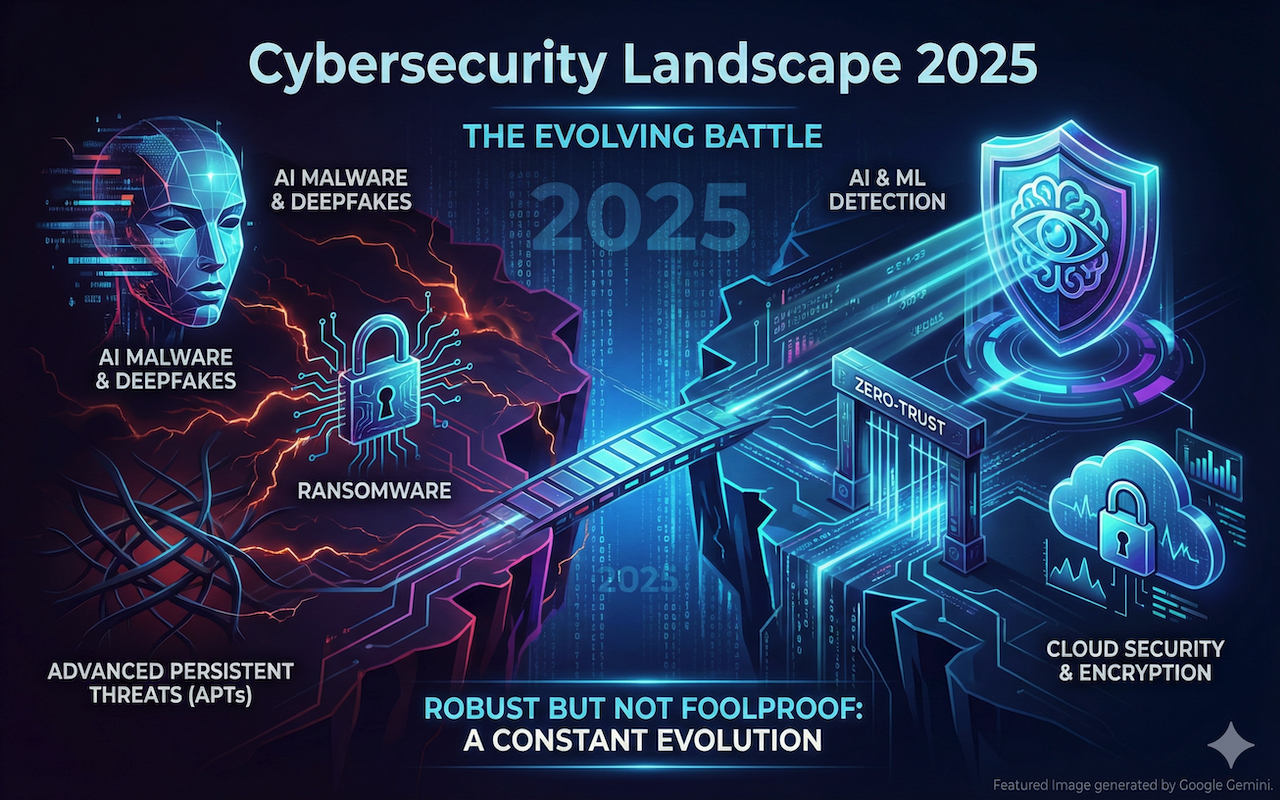
As we step deeper into 2025, the cybersecurity landscape is both more sophisticated and more challenging than ever. With cyber threats evolving at an unprecedented pace, the question arises: Is today’s cybersecurity infrastructure strong enough to defend against these advanced attacks?
The Evolving Threat Landscape
Cyber threats are no longer limited to simple viruses or phishing emails. Today, organizations face complex threats like AI-powered malware, deepfake scams, ransomware targeting critical infrastructure, and supply chain attacks. Advanced persistent threats (APTs) are increasingly common, with attackers using sophisticated methods to infiltrate networks silently over extended periods.
Advancements in Cybersecurity Technology
In response, cybersecurity technologies have evolved dramatically. Artificial intelligence and machine learning now play a central role in threat detection. Systems can identify unusual network behavior in real time, predict potential vulnerabilities, and even automate responses to contain breaches. Zero-trust architectures and multi-factor authentication have become standard practices, reducing the likelihood of unauthorized access.
Cloud security has also matured, offering organizations enhanced data protection, continuous monitoring, and robust encryption methods. Furthermore, cybersecurity frameworks are increasingly proactive rather than reactive, emphasizing risk management, continuous auditing, and the sharing of threat intelligence.
Challenges That Persist
Despite these advancements, cybersecurity is not invincible. Human error remains a significant vulnerability—employees may still fall for phishing scams or misconfigure critical systems. Sophisticated cybercriminals are increasingly leveraging AI themselves, creating threats that can adapt and bypass traditional defenses. Regulatory landscapes also struggle to keep pace with technology, leaving gaps in compliance and enforcement.
The Bottom Line
Cybersecurity in 2025 is stronger and more adaptive than ever, but it is not a complete shield against advanced threats. The battle between cyber attackers and defenders is ongoing, and organizations must adopt a layered, proactive security approach. Continuous education, investment in advanced technologies, and real-time threat intelligence are essential to staying ahead.
In essence, cybersecurity today is robust but not foolproof. It’s a constantly evolving field where vigilance, adaptability, and innovation are the keys to staying protected.
Featured Image generated by Google Gemini.
Author

Rosie Anna


0 Comments
Comments are moderated to keep the discussion useful and respectful. Spam, automated submissions, and low-value promotional comments are removed.
Leave a Comment