
| Webtraffic Exchange | Web Development
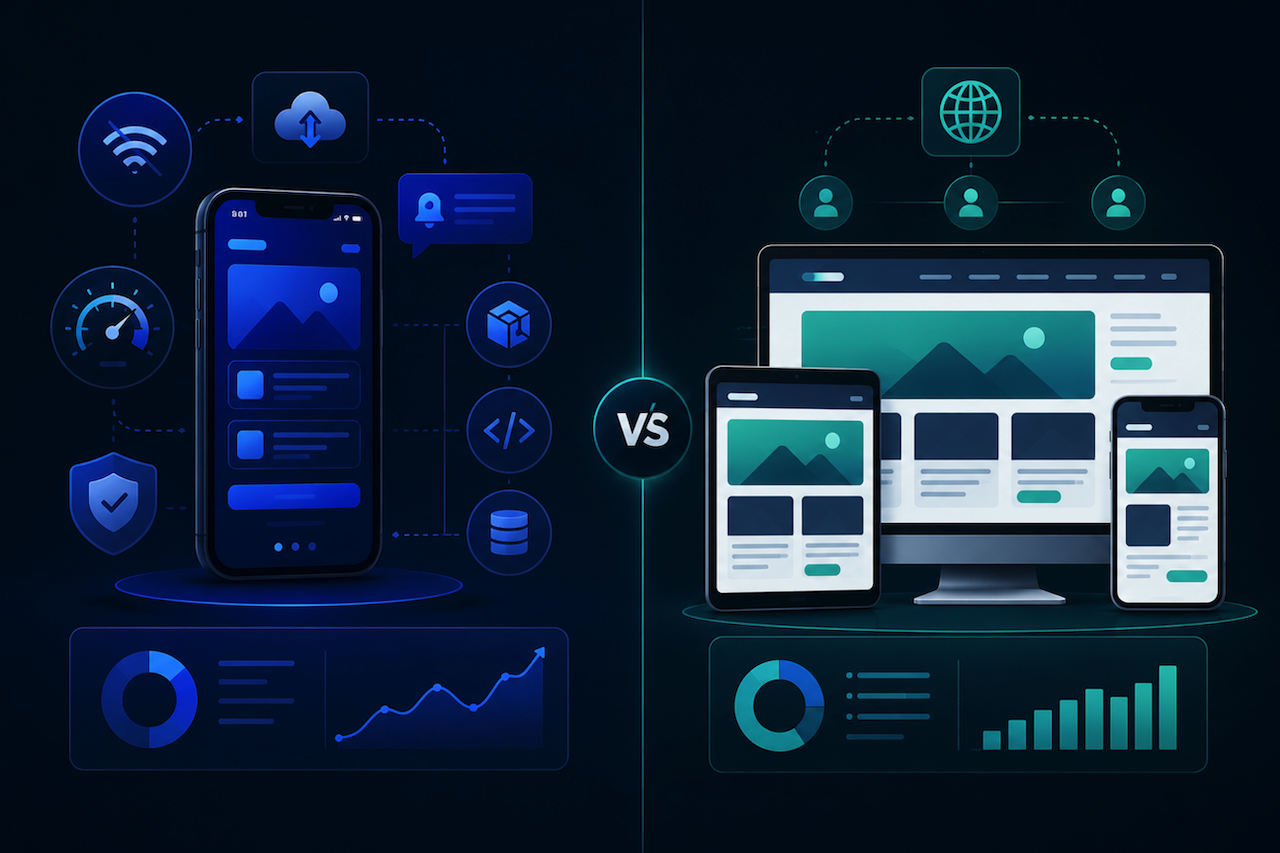
Businesses today face increasing pressure to deliver fast, smooth, and engaging digital experiences. Customers expect websites and applications to run efficiently across devices while offering many of the conveniences associated with native mobile apps. As a result, organizations often evaluate whether a traditional responsive website or a more application-like web experience is the better investment.
Both approaches support accessibility and mobile usability, but they serve different business objectives and technical requirements. Understanding the differences can help teams choose the option that best aligns with their performance expectations, user engagement goals, and long-term scalability needs.
This article explores the key distinctions between these two approaches, including their advantages, limitations, and the situations where each may be the better fit.
What Is a Responsive Website?
A website built using responsive web design automatically adjusts its layout and content based on screen size and device type. Whether visitors arrive from a desktop computer, tablet, or smartphone, the goal is to provide a consistent browsing experience.
Key characteristics include flexible layouts, mobile-friendly navigation, device compatibility, improved readability, and cross-browser support. These features help ensure content remains accessible and easy to use across a wide range of devices.
Ultimately, this approach allows users to access information smoothly regardless of how they choose to browse.
What Is a Progressive Web App?
A Progressive Web App combines the accessibility of a website with many of the features commonly associated with mobile applications. Built using standard web technologies, it delivers an app-like experience through capabilities such as offline access, push notifications, and home-screen installation.
Common features include:
- Offline functionality
- App-like interfaces
- Fast loading performance
- Push notifications
- Background synchronization
- Access to device hardware
This approach bridges the gap between traditional websites and native mobile applications while remaining accessible through a web browser.
Core Differences Between PWAs and Responsive Websites
Although both approaches support mobile users, they serve different purposes and offer different capabilities. While they may appear similar on the surface, the user experience, functionality, and technical features can vary significantly.
User Experience
Responsive sites primarily focus on adapting layouts to different screen sizes. In contrast, Progressive Web Apps provide a more immersive, application-like experience.
Common advantages include:
- Smooth transitions
- Offline browsing
- Fast-loading interactions
- More personalized engagement
Responsive websites generally prioritize accessibility and content delivery but do not typically include the same level of interactivity.
Performance
These applications can often deliver faster and more responsive experiences because service workers handle caching and related tasks in the background. This can improve performance even under less-than-ideal network conditions.
Traditional websites rely more heavily on an active internet connection and available browser performance.
Offline Accessibility
One of the biggest advantages is offline functionality. Users can continue accessing selected content even when connectivity is unavailable. While not all features may remain accessible, enough functionality often remains available to provide value.
Most websites still require a live internet connection for the majority of their functionality.
Installation Capability
They can be installed directly on a device's home screen without requiring distribution through an app store.
By comparison, traditional websites remain browser-based and do not typically offer installation capabilities.
Push Notifications
Push notifications allow businesses to reconnect with users even when they are not actively browsing the site.
Traditional websites generally do not offer the same native notification capabilities.
SEO Benefits of Responsive Websites
Mobile-friendly websites often provide SEO advantages because search engines favor experiences that perform well across devices. Common benefits include a single URL structure, easier indexing, lower bounce rates, improved accessibility, and stronger user engagement.
Search optimization considerations for Progressive Web Apps are similar but not identical. These applications can rank well when properly optimized, but they often require additional attention to crawlable content, rendering, metadata, structured data, and server performance.
Because this approach relies heavily on JavaScript, developers must ensure search engines can correctly discover and index content. Otherwise, visibility may suffer despite strong performance and user experience.
Cost and Development Complexity
Traditional websites are often more budget-friendly and easier to build than Progressive Web Apps.
This approach typically involves frontend development, mobile optimization, and standard hosting infrastructure.
The alternative can be more complex because it relies on service workers, offline caching, advanced APIs, and app manifest files. It may also require additional security considerations and ongoing maintenance.
Before choosing either option, organizations should evaluate their long-term functionality requirements, technical resources, and development budget.
When Businesses Should Choose Responsive Websites
This approach is often the preferred choice for organizations focused on delivering information, improving SEO performance, and keeping development costs manageable. It is also well suited to projects that require shorter launch timelines and straightforward maintenance.
Blogs, corporate websites, educational platforms, and local business websites often benefit the most from this type of implementation.
When Businesses Should Choose PWAs
Progressive Web Apps are often a better fit for organizations seeking stronger user engagement and a more app-like experience. They are particularly well suited to e-commerce platforms, media and streaming services, social networks, food delivery applications, travel booking systems, and subscription-based services.
Organizations that require advanced mobile functionality often favor this approach because it combines accessibility with strong performance and interactive capabilities.
Security Considerations
Security remains an important consideration for both approaches. Progressive Web Apps require HTTPS encryption because service workers only operate in secure environments.
Regardless of implementation, organizations should prioritize SSL certificates, secure authentication, data encryption, regular updates, and vulnerability testing. Strong security practices help build user trust and protect sensitive information.
User Engagement and Retention
Application-like web experiences often deliver stronger user engagement metrics. Features such as push notifications, offline access, and app-style navigation can encourage users to return more frequently and spend more time interacting with the platform. As a result, businesses may see improvements in:
- User retention
- Session duration
- Repeat visits
- Conversion rates
Content-focused websites can still be the better choice for organizations that prioritize discoverability and information delivery, where search visibility and straightforward browsing experiences are often more important than advanced interactive features.
Scalability and Long-Term Growth
As businesses grow, scalability becomes increasingly important. Content-focused platforms often benefit from a flexible website architecture, while highly interactive experiences may be better served by a more application-oriented approach. The right choice ultimately depends on the functionality, performance requirements, and long-term goals of the platform.
Challenges of Progressive Web Apps
Despite their advantages, this approach comes with certain limitations and implementation challenges.
Common concerns include limited support on certain devices, greater development complexity, increased testing requirements, browser compatibility considerations, and more demanding maintenance needs.
Before adopting this model, organizations should carefully evaluate their technical resources, development capabilities, and ability to provide long-term support.
Future Trends in Web Experiences
The distinction between websites and applications continues to blur as digital experiences become more advanced and interconnected.
Several emerging technologies are shaping the future of both approaches, including:
- AI-powered personalization
- Voice-enabled interfaces
- Enhanced caching systems
- Cloud-native architectures
- Cross-platform synchronization
- Faster backend frameworks
Organizations that invest in scalable web technologies will be better positioned to meet changing user expectations.
Conclusion
Both approaches offer valuable benefits, but they serve different business needs depending on audience expectations, functionality requirements, and technical resources. Traditional responsive websites remain a strong choice for organizations that prioritize accessibility, SEO, and efficient content delivery. They are often cost-effective, work well across devices, and support strong search visibility.
By contrast, Progressive Web Apps provide features such as offline access, push notifications, and faster interactions. These capabilities can be especially valuable for organizations focused on user engagement, retention, and mobile performance.
Before making a decision, organizations should carefully evaluate their audience, growth plans, functionality requirements, and available technical resources.
Ultimately, the right choice comes down to balancing usability, performance, scalability, and long-term business objectives.
Author

Webtraffic Exchange


0 Comments
Comments are moderated to keep the discussion useful and respectful. Spam, automated submissions, and low-value promotional comments are removed.
Leave a Comment