
| Ashish Kolte | Search Engine Optimization, Digital Marketing, Artificial Intelligence
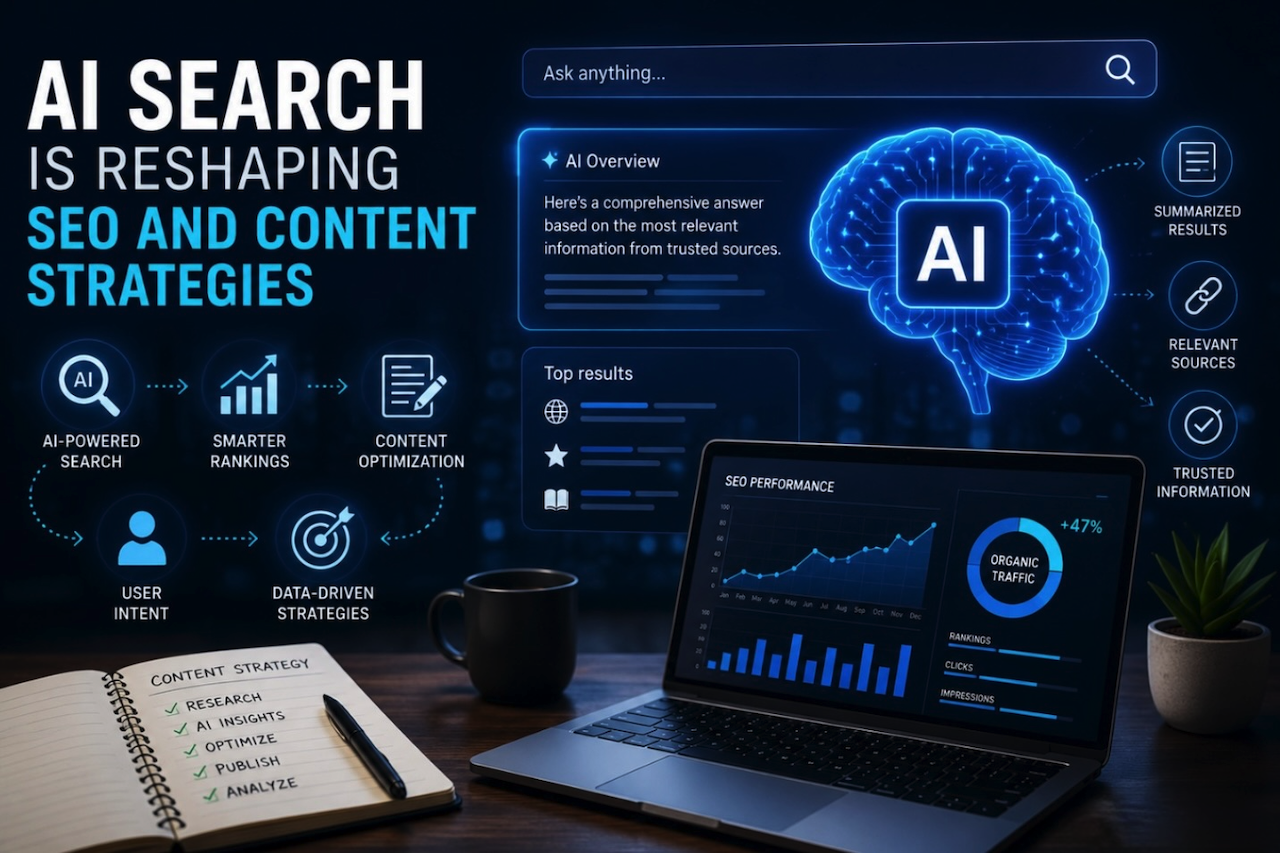
AI has turned into a key element when it comes to the progress of web search. Previously, conventional search engines were mostly determined by the desire to find a link between keywords and pages, but now we have AI systems that can interpret meaning, context, and interplay between ideas as well, which leads us to a new way of using SEO strategies among organizations, information providers, and content authors.
According to the predictions by Data Intelo, the worth of the artificial intelligence sector will reach $214.6 billion by the year 2025. As per projections, its worth will rise to $3,680.5 billion in 2034 owing to an outstanding CAGR of 35.7% from 2026 to 2034, which indicates the speed at which this technology market has been growing over the period.
Shifting from Keyword Search to Intent-Based Search
SEO has been developed by focusing on more than just exact-match keywords and backlinks. The advent of AI search has introduced a far more advanced method of looking for keywords based on semantic analysis, search intent, and relevant context.
Technology known as Natural Language Processing (NLP) has made it possible for search systems to understand entire questions instead of searching for isolated keywords only. The more words in a search request are present (for instance, between 10 and 15), the more contextual results one can get. It effectively works because AI systems search for connections between phrases, instead of analyzing keywords.
Search behavior has significantly evolved:
| Search Trend | Approximate Impact |
|---|---|
| Long-tail search queries | Over 70% of total searches |
| Voice search usage among adults | Around 30% |
| Mobile search traffic | More than 60% |
| Conversational AI-assisted searches | Growing rapidly year over year |
These changes compel publishers to provide one comprehensive piece of material instead of opening each page to cover slight keyword variations.
Quality of Content Becomes a More Important Ranking Factor
Search engines that use artificial intelligence use different parameters to assess content. Current algorithms attempt to evaluate whether the content is expert-driven, provides correct answers to the questions posed, and brings actual value to the audience.
There are several key measurable parameters of quality content today:
- Articles with a length of 800 to 1,500 words usually perform better in case of complex informational queries.
- Page headings could boost the readability of content by 35%.
- Recently updated content may outrank outdated articles in terms of visibility.
- Covering the topic in a detailed way helps reduce bounce rates and increase average time spent on the web resource.
As opposed to rewarding unproductive optimization strategies, artificial intelligence increasingly favors content that is written in a detailed and logical manner.
AI Search Promotes Topic Authority over Single Keywords
Modern SEO strategies are placing greater emphasis on constructing topical authority, rather than on just keyword strategies. The focus should not just be on the number of articles written for specific keywords, but rather on creating a "knowledge cluster" that brings together various articles on a niche subject matter.
For example, a technology blog on AI could include sections on machine learning, generative AI, AI ethics, and enterprise automation.
Studies by content marketing experts revealed that themed content clusters generate between 20% and 40% more organic traffic as compared to other methods. Besides, the internal links also help Google understand the interconnectivity of content.
Importance of User Experience in SEO Performance
Search engines powered by artificial intelligence give importance to users' interactions on websites after they have clicked on search results. Although website ranking is still complicated, signals related to user engagement have an increasing influence on future visibility.
Key UX factors include:
- High speed of page loading.
- User-friendly website design which is easy to navigate.
- Easy navigation of site pages.
- Easy readable format of the content.
- Use of visual and multimedia elements.
- Reliable and modern information.
Research shows that web pages that load in two seconds have better engagement than slower ones. In addition, mobile-optimized websites can retain visitors for longer periods of time, as more than half of traffic is from smartphones.
Good user experience is a contributing factor to good content creation.
The Evolution of Search Towards a More Conversational Form
There has been a shift towards using whole questions rather than short keyword expressions when searching the internet. AI tools in the search arena give back instant references, recommendations, and responses highly similar to those provided by virtual assistants.
To provide some examples, instead of simply entering "SEO tips" in a search bar, the searcher may word it differently, for example: "In what way does AI search influence the SEO strategy of technology sites?" Such transformation requires content providers to write their content naturally and still include discussion of relevant topics in the same piece.
Research shows that the role of inquiry-based searching has grown steadily over several years now, meaning people become more familiar with chatbots.
Measuring Success Needs New SEO Metrics
In the past, traditional SEO emphasized keyword rankings. With the advent of AI search, more indicators have come into play to measure performance, such as content quality and user satisfaction.
So-called keywords today can include:
- Organic engagement time
- Click-through rate
- Content freshness
- Topical coverage
- Returning visitors
- Pages viewed
For example, growth in average engagement time from 90 seconds to 150 seconds shows that content is being accessed regardless of steady keyword rankings. Meanwhile, greater visibility in relevant queries indicates an improvement in authority.
These metrics give a foundation to understand how users interact with the content created due to the evolution of AI-enabled searches.
Conclusion
The use of artificial intelligence in search engines has altered the concept of searching for information by focusing on the significance of information instead of just matching keywords. As search engines enhance their ability to understand language and determine content quality, SEO practices are shifting toward covering complete topics, accuracy, and user experience, among other things.
The future of search will not limit itself to technical optimization. Businesses that emphasize creating evidence-backed, organized, and up-to-date material will be able to adapt to the changes brought about by AI in the field of search.
Author

Ashish Kolte
0 Comments
Comments are moderated to keep the discussion useful and respectful. Spam, automated submissions, and low-value promotional comments are removed.
Leave a Comment