
| Samrat Biswas | Search Engine Optimization, Web Design, Web Development
A buyer types ‘best project management tool for remote teams’ and hits Enter in ChatGPT. It gives the buyer five products. But why isn’t yours included?
That’s because AI didn’t even come across your product because it couldn’t read your site. This is what SaaS discovery looks like today. Beyond Google, buyers now find software through ChatGPT and other AI assistants. Every one of these needs clean and crawlable pages before they can rank or recommend you.
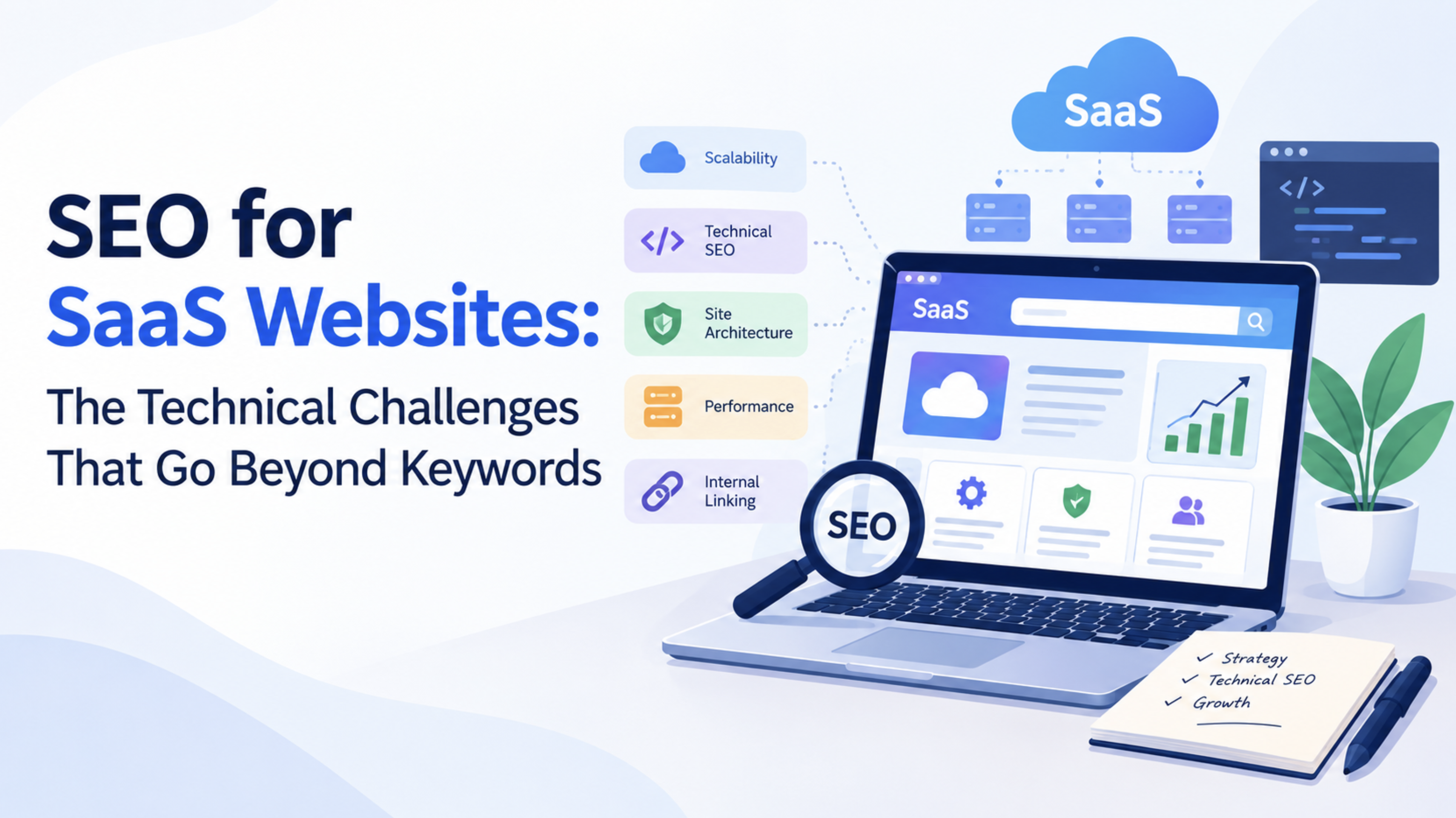
This isn’t easily achievable when a single domain juggles marketing pages, a live app, and more. This is exactly the problem that technical SEO in SaaS is built to solve. Technical considerations during SaaS website development can quietly determine whether a site gets discovered. Let’s look at the technical challenges that stand between SaaS sites and their buyers. We will also go over how to fix each one.
Technical SEO for SaaS Websites in 2026: Challenges and Solutions
Saas sites need a different plan than simple websites. This is because they are dynamic and feature-rich. Additionally, SaaS sites are built with complex code.
Currently, the biggest problems are AI readability and heavy code loading. Missing code tags and slow speeds are common issues as well. Fix these during SaaS website development. It helps you rank high in search results and show up inside AI answers.
Making SaaS Websites Visible in AI Search
These days, people use AI tools like regular search bars to find software. Your website has to be readable by machines as well as humans.
Challenge: Generative Engine Optimization and AI Crawlability
Tools like ChatGPT and Claude help people pick software. These tools look for simple and accurate facts. But many SaaS sites hide important facts inside complex code and leave help pages messy. AI bots can’t read content that requires extra code to run. If they cannot see what your software does or who it helps, they won’t recommend your brand.
Solution: Build AI-Friendly Content Structures
Set your robots.txt file to welcome AI bots like PerplexityBot and ChatGPT-User. Have clear pages for your features and help guides. Make sure you have a short summary at the top of each page. That way, AI tools can easily read and quote the main point. Additionally, ensure the product details are similar across review sites. By taking these steps, you help search engines and AI tools have the facts that they need.
Managing JavaScript Challenges in SaaS Websites
Interactive tools make SaaS great. However, how you set up your SaaS application architecture can hide your content from search engines.
Challenge: Client-Side Rendering and Indexing Issues
To build smooth pages, most SaaS marketing sites use heavy code called JavaScript. If your main links or page details only show up after a browser runs this code, you will face problems. Google can read JavaScript. However, it takes extra time. That is why your rankings are delayed. A lot of AI bots skip this code completely. This means search engines miss your pages, and you lose visitors.
Solution: Use the Right Rendering Approach
Pick the page-building style early when planning your SaaS application architecture. Opt for Server-Side Rendering or Static Site Generation on all public pages. That way, your words are ready instantly in the raw code. Save heavy browser-only code for private pages behind a user login.
Make marketing pages and help guides easy for bots to read right away. Instead of code-based links, opt for simple HTML links. This balance keeps public pages visible while keeping your app fast and fun to use.
Scaling SaaS Content Without Creating SEO Problems
Adding thousands of pages helps you grow. But you need to add pages with a clean plan. Otherwise, it would be a big mess.
Challenge: Programmatic SEO and Duplicate Pages
A lot of the time, SaaS companies create large sets of similar pages for app lists and local ads. Similar-looking publishing pages hurt your site score. Additionally, it wastes search bot time and lowers your rankings. Without careful control, your site becomes too messy for AI to grade properly.
Solution: Create a Scalable Content Architecture
Plan your SaaS website architecture so every page offers real, new value. Avoid publishing pages that repeat the same words with tiny changes.
Consider adding self-referencing canonical tags to all public pages. That way, search engines will understand which page is the main one.
Block extra link filters using your robots.txt file or search settings. From time to time, check your indexed pages. The idea is to keep search bots focused on your best content. These habits help you grow without losing quality.
Improving SaaS Search Visibility With Structured Data
Both AI tools and search engines require explicit labels to understand your software correctly.
Challenge: Limited Machine Understanding
There are many SaaS sites that lack clear machine-readable markup for software details and documentation structure. Without these signals, AI tools and search engines struggle to understand what your product offers.
Solution: Implement Advanced Schema Markup
Add SoftwareApplication schema code to list your prices, main tools, and user reviews. Opt for Organization schema for your company facts and BreadcrumbList schema on help pages. Google has stopped showing FAQ results in May 2026. But when you use the FAQPage schema, AI tools can read your questions and answers. These code labels transform messy labels into clear and trusted signals.
Improving SaaS Website Performance for Better SEO
Speed and responsiveness impact both rankings and conversion rates. Still, SaaS sites are often weighed down by extra code.
Challenge: Core Web Vitals and Third-Party Scripts
Tracking pixels and heavy code files slow down your site. A bad speed score ruins user experience. Additionally, it drops your sales and hurts your search rankings.
Solution: Optimize SaaS Website Performance
You begin SaaS website performance optimization by deleting old code. Delaying non-essential tools and letting files load in the background are also recommended.
Consider sending files through a fast content delivery network. Make the images smaller. Aim for the following standard speed targets:
| Metric | Target |
|---|---|
| Main content loads | Under 2.5 seconds |
| Page clicks respond | Under 200 milliseconds |
| Layout shifts | Under 0.1 seconds |
These fixes create fast pages that visitors and search engines love.
Building an SEO-Ready SaaS Architecture for Future Growth
Plan technical SEO for SaaS from the very first day of website development. The design choices made at the beginning will dictate how easily your site can grow later. Opt for simple web links and fast code to avoid any future headaches. Readable text layouts and clean help centers should also be your priority.
Close teamwork between marketers and developers keeps new projects from hurting your rankings. With strong basics, your platform can add new tools and pages smoothly.
Wrapping Up
Currently, technical SEO for SaaS is the core of long-term business growth. Fix AI readability and page growth to win in search. Consider prioritizing SaaS website performance optimization. Careful work on your SaaS website architecture and ongoing performance optimization drives high-quality user visits. Additionally, AI tools and search engines will be able to find your brand easily. Companies should build a strong technical basis into their plans. It will help them win search traffic long after simple keyword tricks stop working.
Author

Samrat Biswas
0 Comments
Comments are moderated to keep the discussion useful and respectful. Spam, automated submissions, and low-value promotional comments are removed.
Leave a Comment