
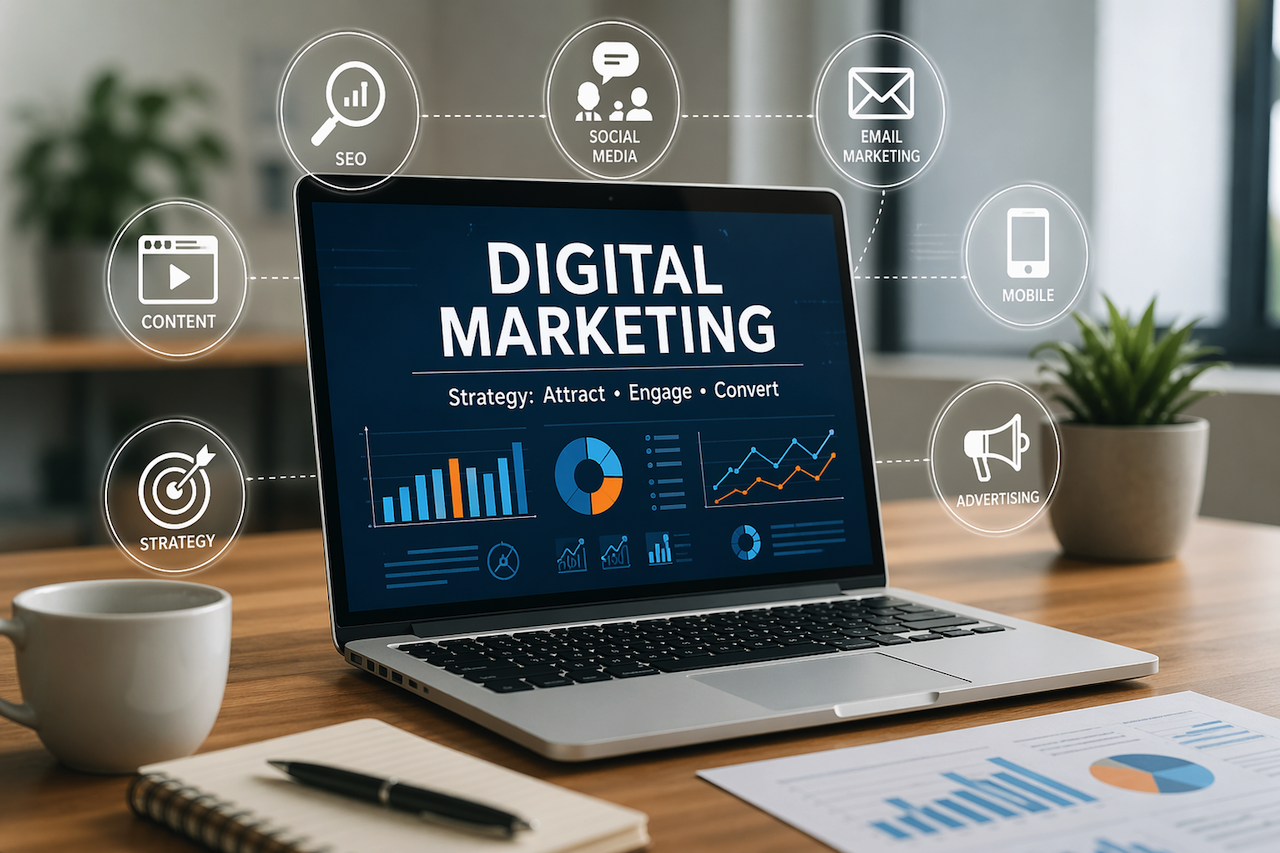
In today’s competitive business world, having a strong digital presence is no longer optional. Digital marketing serves as an essential customer acquisition tool, helping businesses increase revenue across industries, from startups and local service providers to established brands. Businesses can use digital marketing strategies to achieve long-term growth and remain competitive in a rapidly evolving online market. Customers now rely on search engines, social media, websites, and online reviews before making purchasing decisions. The right marketing strategy requires a clear and consistent approach. Digital marketing helps improve visibility, generate quality leads, and build trust in the market.
Understanding Digital Marketing in Today’s Business Landscape
Digital marketing refers to all online efforts used to promote a brand, service, or product. The practice uses multiple channels, including search engine optimization, pay-per-click advertising, social media marketing, content creation, email marketing, and website optimization.
Digital marketing enables businesses to target their audience more precisely than traditional marketing methods. Brands can establish direct communication with potential customers who already show interest in their services through both search and targeted social campaigns.
Why Businesses Need Digital Marketing
The business environment continues to grow across industries, including healthcare, real estate, retail, and professional services. As competition increases, businesses must develop strong online presence strategies to maintain visibility. Understanding how customers behave online and how competitors position themselves helps businesses create more effective strategies.
People searching online for services such as dentists, law firms, or home services tend to choose businesses that appear at the top of search results. Strong visibility leads to more clicks and higher conversion potential. Digital marketing acts as a key driver of business growth.
Search Engine Optimization for Long-Term Visibility
Digital marketing relies heavily on SEO as one of its most effective components. SEO helps websites achieve better rankings on search engines like Google. A successful SEO strategy includes keyword research, technical website improvements, high-quality content creation, and, when relevant, local optimization.
Businesses that serve specific regions can benefit from local SEO strategies, which improve visibility in location-based searches. Appearing in relevant search results allows businesses to connect with nearby customers at the right moment. SEO builds long-term authority and generates consistent organic traffic.
Pay-Per-Click Advertising for Instant Results
While SEO supports long-term growth, pay-per-click advertising delivers immediate visibility. Platforms like Google Ads and social media advertising allow businesses to reach potential customers quickly.
PPC campaigns can be tailored using demographic data, geographic targeting, customer interests, and search behavior. This helps maximize return on investment while reaching the most relevant audience. Businesses can promote their services during peak seasons, special events, or product launches to generate new leads.
Social Media Marketing for Brand Awareness
Social media platforms such as Instagram, Facebook, LinkedIn, and TikTok have become essential marketing channels. Businesses use these platforms to engage with customers, promote services, and build brand awareness.
Social media marketing involves more than regular posting. It includes audience research, campaign planning, visual branding, and performance tracking. Businesses benefit from consistent messaging and meaningful engagement that strengthens customer relationships.
Content Marketing as a Growth Strategy
Content plays a fundamental role in digital marketing. Blogs, articles, landing pages, videos, and social media posts provide valuable information that attracts and converts potential customers.
For example, a home improvement company might create content such as renovation tips, maintenance advice, or service guides. This approach builds trust and positions the business as an authority in its field. High-quality content increases engagement and keeps visitors on the website longer.
Website Optimization and User Experience
A website often creates the first impression of a business. Slow loading times, outdated design, or poor navigation can cause users to leave quickly. Optimizing websites for mobile responsiveness, speed, and usability improves overall performance.
Effective website optimization includes clear calls to action, streamlined navigation, and fast load times. A well-designed website increases conversions and supports business growth.
Email Marketing for Customer Retention
Maintaining existing customer relationships is just as important as generating new leads. Email marketing allows businesses to stay connected with their audience through newsletters, promotions, and personalized offers.
Automated email workflows help keep customers engaged over time. This approach is especially effective for service-based businesses, e-commerce stores, and subscription-based models.
Analytics and Performance Tracking
One of the biggest advantages of digital marketing is the ability to measure performance. Businesses can track website traffic, click-through rates, conversions, bounce rates, and user behavior.
Data-driven insights help refine strategies and improve results. This ensures that decisions are based on real performance data rather than assumptions.
Building a Strong Local Presence
For many businesses, local visibility remains important. Appearing in relevant search results helps increase foot traffic and service inquiries.
Strategies such as local SEO, map listings, customer reviews, and localized content help businesses connect with their target audience. This builds trust and strengthens relationships within the community.
How the Right Strategy Drives Business Growth
The primary goal of digital marketing is business growth. Growth can come from increased traffic, higher conversion rates, improved brand recognition, and stronger customer retention.
A well-structured strategy aligns marketing efforts with business goals. Tailored campaigns based on target audiences, industry trends, and growth objectives yield more effective results and a better return on investment.
Conclusion
Digital marketing remains one of the most effective tools for business growth. Channels such as SEO, PPC, social media, and content marketing work together to create sustainable results.
A strong strategy that combines visibility, engagement, and conversion optimization enables businesses to succeed in a digital-first environment. By focusing on consistent execution and data-driven improvements, businesses can build long-term success and remain competitive in an evolving marketplace.
Featured Image generated by ChatGPT.
Share this post
Leave a comment
All comments are moderated. Spammy and bot submitted comments are deleted. Please submit the comments that are helpful to others, and we'll approve your comments. A comment that includes outbound link will only be approved if the content is relevant to the topic, and has some value to our readers.
Comments (0)
No comment