
Key Takeaways
- Cross-platform development methods decrease both development time and project expenses.
- Current-generation web frameworks can deliver app speed and power close to that of a native app.
- AI technology, when combined with cloud computing, creates new ways for development teams to work.
- Organizations adapt their systems to evolve with their changing needs while maintaining consistent, similar interactions among all users within the same ecosystem.
Cross-platform development has shifted from a compromise solution to a strategic advantage. Companies no longer see it as a way to save costs only. The company uses this technology for three main purposes: faster service delivery, expansion of its customer base, and a uniform user experience across platforms.
Many businesses rely on development teams to build scalable products without duplicating effort across iOS and Android, often through cross platform application development.
This shift reflects a broader change in how digital products are built and scaled.
What Is Cross-Platform Development Today?
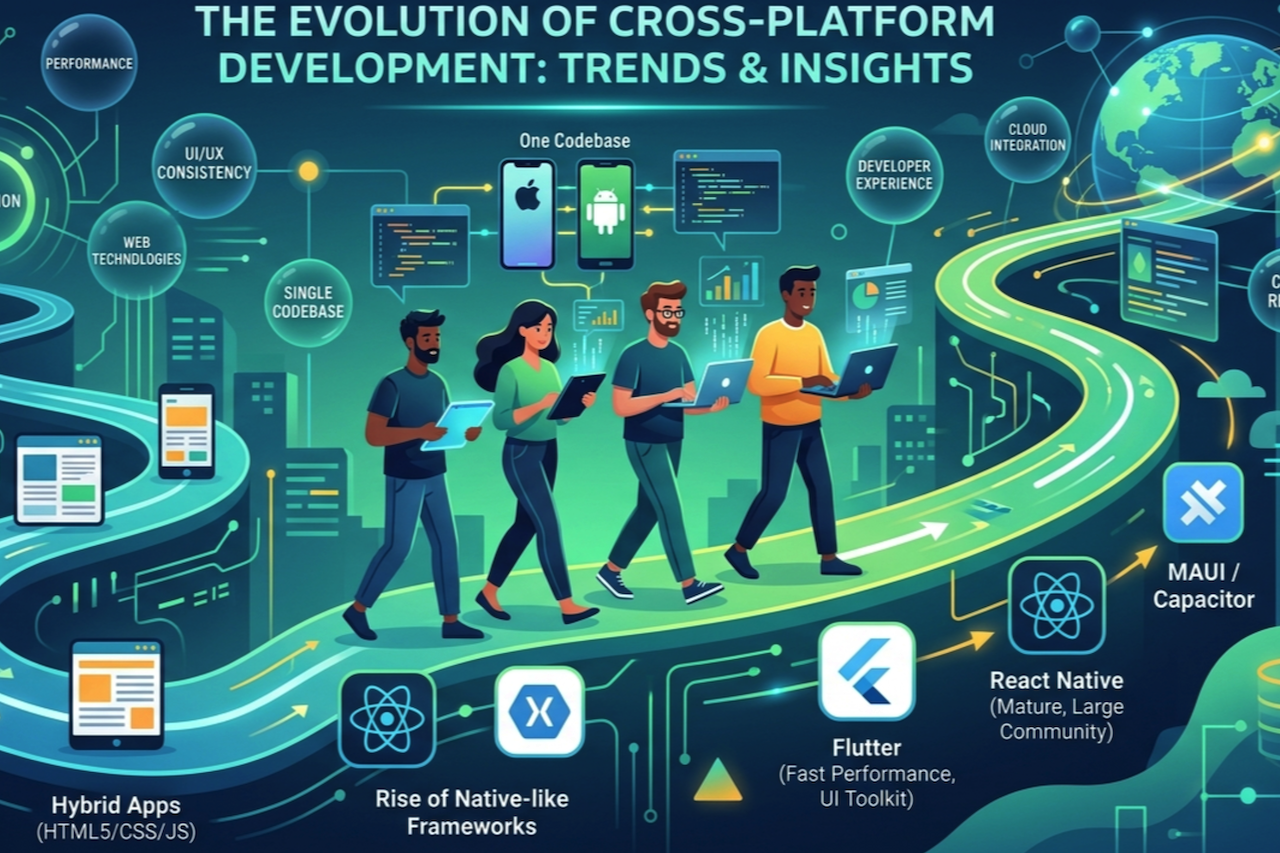
Cross-platform development enables developers to create code that can run on different platforms. The previous methods faced challenges because they could not deliver better performance and required system upgrades. Modern tools have made substantial advances over earlier versions.
These solutions currently provide support for:
- Native-like performance
- Access to device features
- Consistent UI across platforms
- Faster development cycles
Both startups and enterprises can use this approach effectively. Frameworks such as Flutter, React Native, and .NET MAUI provide organizations with scalable solutions for building applications across multiple platforms.
How Cross-Platform Development Has Evolved
From Hybrid Apps to Near-Native Performance
The initial cross-platform applications used web technologies that they executed within native application environments. The applications performed sluggishly because they needed better responsiveness to user input.
The current frameworks package rendering engines together with native system components to produce their applications. System upgrades lead to better performance and improved user interaction.
The gap between native and multi-platform applications has narrowed.
Improved Developer Experience
Development tools now operate more efficiently than before.
The development process benefits from hot reload and reusable components, together with strong community support, which reduces development time.
The team can now develop new features faster while incorporating user feedback, without having to build the complete application from scratch.
Better Access to Native Capabilities
In the past, developers had limited access to device functionality. Today, modern frameworks provide APIs that allow access to:
- Camera and media
- GPS and location services
- Push notifications
- Biometric authentication
Developers can create applications with multiple features because this system enables them to use native code only when necessary.
Key Trends Shaping Cross-Platform Development
Growing Demand for Faster Time to Market
Businesses need to launch products quickly. This model enables faster delivery by reducing duplicate work. Teams maintain a single codebase instead of managing separate native projects. The method assists enterprises in testing concepts while they develop their products at an accelerated pace.
Focus on Cost Efficiency
The organization needs to spend more money because it requires two separate development teams to work on iOS and Android projects. The organization needs to spend less money because these solutions allow items to run on multiple systems without developing separate software for each.
- Development Costs
- Maintenance Costs
- Resource Requirements
This characteristic makes them more attractive for startups and firms looking to optimize their budgets.
Integration With Cloud and Backend Services
Cloud infrastructure serves as the foundation for modern applications. These solutions integrate seamlessly with multiple platforms through robust connectivity capabilities.
- IaaS Databases
- APIs and Microservices
- Real-Time Data Streams
Supports and improves scalability and performance.
AI-Driven Development Workflows
AI tools assist developers in writing code, testing software, and debugging programs. The tools enable users to work more efficiently while decreasing their need to perform tasks manually. AI technology will evolve into a fundamental component of development processes that developers use in their day-to-day work.
Emphasis on a Consistent User Experience
Users expect a consistent experience regardless of the devices they use. This approach helps ensure seamless interactions across platforms while supporting broader business objectives.
- Bridged Design
- Patterned Interactions
- Easy Shifts from Device to Device
It helps to achieve higher user satisfaction, brand consistency, and image.
Advantages of Cross-Platform Development
This approach offers numerous benefits.
- Faster Development Cycles: The development process accelerates as teams reuse existing components, allowing faster delivery without rebuilding from scratch.
- Easier Maintenance: Maintaining a single codebase requires less effort than managing multiple projects, enabling updates and bug fixes to be applied across all platforms simultaneously.
- Wider Market Reach: Businesses can reach both iOS and Android users at once, increasing user acquisition and revenue potential.
- Scalability: Architecture supports business growth by allowing teams to add features and expand system capabilities without major redevelopment.
Challenges That Remain
However, cross-platform development is not flawless-in fact, it has its limitations.
- Performance Constraints in Complex Apps: Highly complex applications often require native optimization, especially those involving heavy animations or intensive processing.
- Platform-Specific Differences: Each platform has its own design guidelines, making it challenging to apply a uniform interface. Design elements may need to be adapted for different environments.
- Dependency on Frameworks: Applications rely on external frameworks, and updates or changes to these frameworks can disrupt the development process.
When to Choose This Approach
Cross-platform development provides the best results in particular settings. They cover:
- Startups that are developing minimum viable products.
- Products that are designed to work on both iOS and Android platforms.
- Applications that include basic functions that users expect.
- Businesses that prioritize fast service delivery and low operational expenses.
It may not be suitable for:
- High-end gaming applications.
- Business systems that are very complex and contain a lot of native code requirements.
The goal, in addition to technical requirements, defines the best methodologies for software development.
Future Outlook of Cross-Platform Development
The future of this approach will be shaped by continued advancements in performance, tooling, and intelligent automation.
- Enhanced Performance Optimization: Applications will deliver improved speed and responsiveness, closer to native-level performance.
- Stronger Developer Capabilities: Improved tools and frameworks will streamline development and increase productivity.
- AI Integration: Advanced AI capabilities will further automate development, testing, and optimization processes.
As frameworks continue to mature, more applications are expected to adopt this approach as a standard for building scalable, multi-platform solutions.
Conclusion
This development approach has evolved into a highly effective solution.
The current tools deliver exceptional performance, complete flexibility, and unlimited capacity to scale. The approach helps businesses to achieve cost savings, speed up their development process, and maintain uniformity in user experiences.
The advantages of a system usually outweigh its drawbacks, despite ongoing difficulties.
The strategic implementation of cross-platform development enables companies to accelerate product development, helping them compete successfully across multiple platforms.
Share this post
Author

Read the latest articles from Yuliya Melnik
How to Build an Effective Website in 2026: UX, Accessibility & Strategy

April 1, 2026
An effective website in 2026 delivers a clear structure, fast performance, and accessible content across all devices. Development costs typically range from $15,000 to $150,000 or more, depending on features, integrations, and scale. Platforms that prioritize usability, content clarity, and personalizatio [...]
Learn moreHow Cross Platform Development Supports Faster Product Launches
March 30, 2026
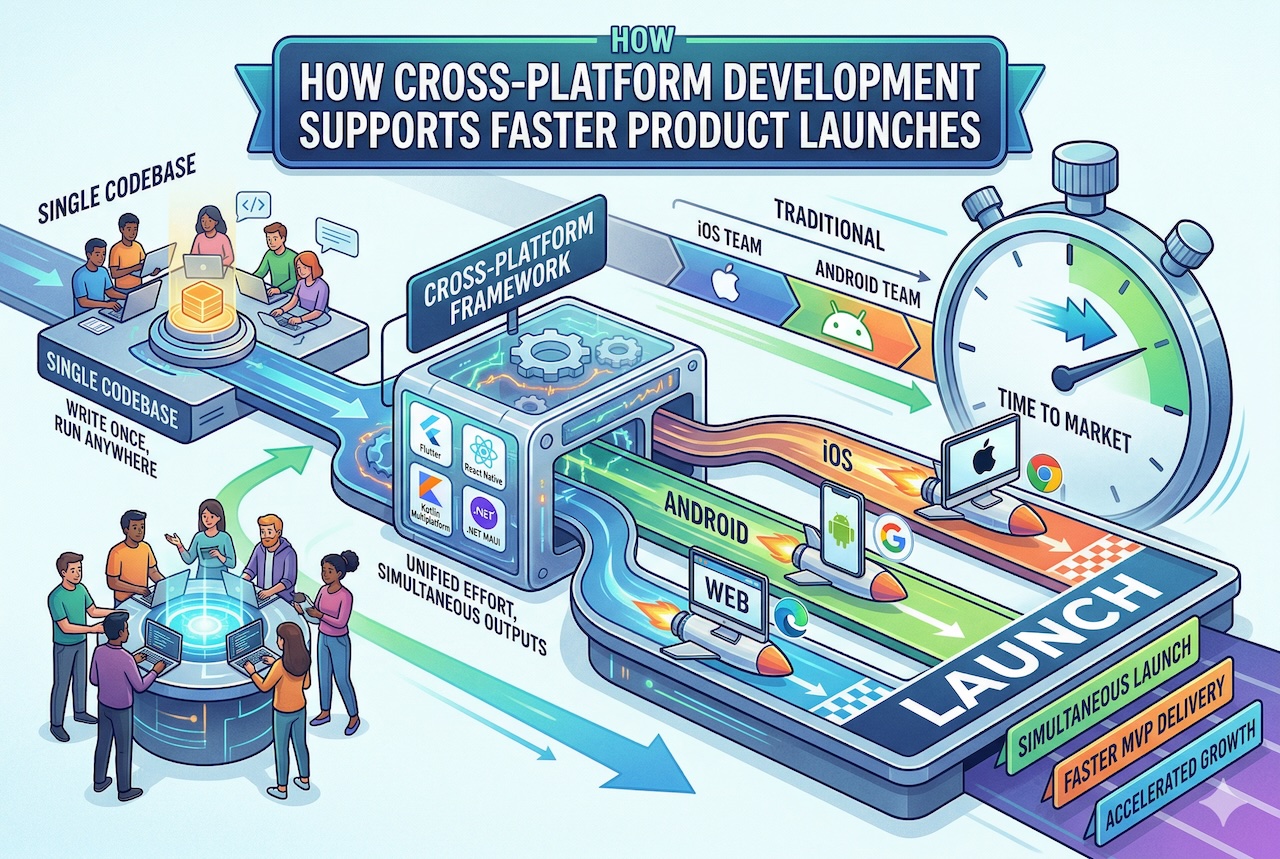
In today’s fast-moving product landscape, speed is no longer a competitive advantage—it is a requirement. Businesses that can launch quickly, gather real user feedback, and iterate efficiently are the ones that gain early traction and long-term momentum. Cross-platform development has emerged as a key enabler [...]
Learn moreLeave a comment
All comments are moderated. Spammy and bot submitted comments are deleted. Please submit the comments that are helpful to others, and we'll approve your comments. A comment that includes outbound link will only be approved if the content is relevant to the topic, and has some value to our readers.
Comments (0)
No comment